| QUICK ANSWER Commercial tenant improvement in California typically costs $50-$300+ per square foot depending on space type and finish level, with timelines of 8-24 weeks from signed contract to occupancy. Office TI is the most common at $50-$150 per sq ft; specialty spaces (medical, restaurant, lab) run higher. Lease structure determines who pays for what improvements. |
As of 2026, commercial tenant improvement (TI) is the process of customizing a leased space to fit a tenant’s specific business needs — from configuring office layouts to building out specialty spaces like medical offices, restaurants, or labs. For tenants, building owners, and property managers planning TI projects in California, understanding the costs, timelines, lease considerations, and execution practices is essential for successful outcomes. This guide covers what you need to know.
About The Barrie Company
The Barrie Company is a San Diego-based project management and cost consulting company providing project management services across healthcare, higher education, senior living, restaurants, retail, and commercial tenant improvement projects throughout Southern California. With a portfolio that includes major institutional clients like SDSU, UCSD, Rady Children’s Health, Palomar Health, Scripps Health, and leading senior living operators, The Barrie Company specializes in complex projects that require experienced project management, regulatory expertise, and careful coordination with occupied facilities. Whether you’re planning a new build, renovation, tenant improvement, or specialty construction project, contact our team to discuss how we can help.
Key Takeaways
• Commercial tenant improvement in California typically costs $50-$300+ per square foot depending on space type, finish level, and existing conditions — with office TI usually running $50-$150 per sq ft and specialty spaces (medical, restaurant, lab) running $150-$500+ per sq ft.
• TI allowance (TIA) from landlords typically covers a portion of construction costs — often $30-$80 per sq ft for office space, with tenants covering remainder. Lease structure significantly affects who pays what.
• Typical office TI timelines run 8-16 weeks from signed contract to occupancy, with permitting adding 2-8 weeks depending on jurisdiction. Specialty spaces (medical, restaurant) typically take 12-24+ weeks.
• Coordinating with the building owner, property manager, and existing building systems is essential — TI affects HVAC distribution, electrical loads, plumbing tie-ins, and life safety systems.
• Working with a project management and cost consulting company experienced in commercial TI helps tenants and owners navigate landlord work letters, construction documents, permitting, building system coordination, and turnover requirements efficiently.
What does commercial tenant improvement actually include?
Commercial TI typically includes interior partitions, doors, ceilings, flooring, finishes, lighting, HVAC distribution to the leased space, electrical and data outlets, plumbing within the space, and any specialty buildout (kitchens, labs, medical equipment, etc.). Base building systems (HVAC main equipment, electrical service, fire/life safety) are typically the landlord’s responsibility but TI ties into them.
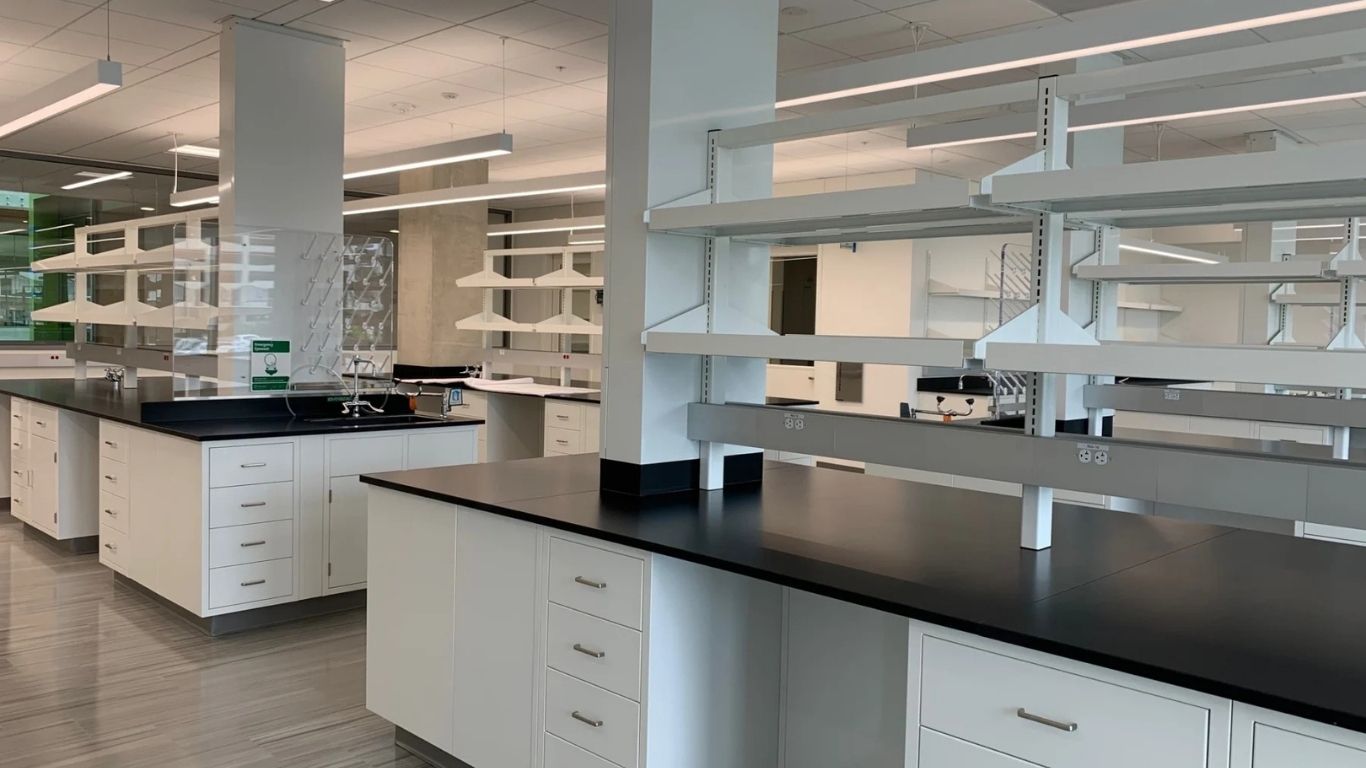
The scope of TI varies significantly by tenant needs. A standard office TI might include private offices, conference rooms, open work areas, breakroom, restrooms (if not existing), and reception — focused mostly on partitions, finishes, and standard MEP. A medical office TI adds exam rooms, procedure spaces, sterile areas, medical gases, specialty plumbing, and ADA compliance specific to healthcare. A restaurant TI includes commercial kitchen equipment, hood systems, dining room, full plumbing, and specialty finishes. A lab TI includes fume hoods, specialty plumbing, gases, and lab-grade finishes. Each space type has different cost ranges and complexity.
What’s the typical cost range for commercial TI in California?
Costs vary by space type. Standard office TI typically runs $50-$150 per sq ft. Higher-end office (premium finishes, conference centers) runs $150-$250 per sq ft. Medical office TI runs $150-$350 per sq ft. Restaurant TI runs $200-$650 per sq ft. Lab TI varies widely from $200-$700+ per sq ft based on lab type and equipment.
These ranges include construction, basic FF&E, and contingency but exclude specialty equipment, furniture, and IT/AV. Within office TI, the cost range reflects significant variation in scope. A simple cosmetic refresh of a recently-occupied space might run $30-$50 per sq ft. A complete buildout from shell space with all new partitions, finishes, MEP distribution, and amenities runs $100-$150+ per sq ft. Premium ‘creative office’ or executive spaces with high-end finishes, custom millwork, and feature lighting can run $200+ per sq ft. The right budget depends on your specific scope, finish level, and starting condition.
How does TI allowance (TIA) work in commercial leases?
TI allowance is the amount the landlord agrees to pay toward tenant improvements, typically expressed as dollars per rentable square foot. TIA varies widely by market, building, and lease length — typical office TIA in California ranges from $30-$80 per sq ft, with longer lease commitments and stronger tenants often securing higher allowances.
TIA is part of the lease negotiation. Larger and longer-term tenants typically receive higher allowances because the landlord amortizes the investment over the lease term. Strong creditworthy tenants in tight markets command higher TIA. Shorter leases or smaller tenants typically receive less. TIA usually covers landlord-standard work — generic office buildout fitting the tenant’s needs. Above-standard work (premium finishes, specialty spaces, custom features) typically becomes the tenant’s responsibility above the TIA. Some leases provide TIA as a credit against rent rather than direct construction payment, affecting cash flow timing. Tenants should evaluate TIA in context of total lease economics and required scope, not as a standalone number.
What’s the typical timeline for commercial TI?
Standard office TI typically runs 8-16 weeks from signed construction contract to substantial completion, plus 2-8 weeks for permitting depending on jurisdiction. Specialty spaces (medical, restaurant, lab) typically run 12-24+ weeks. Design and lease negotiation can add 2-4 months before construction starts.
The full timeline from initial space tour to move-in often runs 6–9 months for standard office TI and 9–15 months for specialty spaces. Major timeline drivers include: lease negotiation (1–3 months), space planning and design development (1–2 months), construction documents and permit submission (1–2 months), permit review (1–3 months depending on jurisdiction), construction (2–6 months depending on scope), final inspections and turnover (2–4 weeks), and FF&E installation and move-in (2–4 weeks). Aggressive timelines can be achieved with experienced project management teams that help coordinate design, permitting, and project schedules and have established relationships with local building departments.
What approvals and inspections are required?
Standard approvals include landlord/property manager design review, local building permit, fire/life safety review, ADA compliance verification, and final building inspection. Specialty spaces (medical, restaurant, food service) require additional health department, OSHPD/HCAI (for healthcare in California), or other regulatory approvals.
The approval process layers multiple stakeholders. Landlord approval typically reviews design compliance with building standards, structural impact, MEP system loads, and aesthetic considerations. The local building department reviews code compliance through plan check, with revisions sometimes needed before permit issuance. Fire department reviews egress, sprinklers, fire alarms, and life safety. Specialty regulators have additional requirements: Health Department for restaurants and food service, OSHPD/HCAI for licensed healthcare facilities in California, and local environmental health for some spaces. ADA compliance is verified throughout. An experienced project management team coordinates these approvals in parallel where possible to help keep the project moving and compress the timeline.
How does The Barrie Company approach commercial TI?
The Barrie Company has delivered commercial tenant improvement projects across Southern California for healthcare clients, universities, senior living operators, restaurants, and other commercial tenants. Our approach emphasizes early collaboration on scope and budget, tight management of permitting and approvals, and minimizing disruption for adjacent tenants and base building operations.
Our portfolio includes TI projects across diverse space types: medical office buildings, dental clinics, surgery centers, university administrative spaces, dormitory and student services, senior living dining and amenity spaces, restaurant build-outs, fitness facilities, classroom upgrades, and standard office build-outs. Each project type has specific requirements that benefit from experience — medical TI requires ICRA when in active healthcare facilities, university TI requires academic calendar coordination, restaurant TI requires Health Department coordination, and so on. Our experience navigating California’s permitting and inspection landscape, working with various landlords and property managers, and delivering TI projects on schedule helps tenants and owners achieve good outcomes with minimal surprises.
Frequently Asked Questions
Q: Who pays for tenant improvements — the tenant or the landlord?
A: It depends on the lease structure. Landlords typically provide a TI allowance (TIA) that covers some or all of the construction cost. Costs above the TIA are typically the tenant’s responsibility. Some leases include ‘turn-key’ provisions where the landlord delivers the space fully built to tenant specifications. Specific terms are negotiated in each lease.
Q: Can tenants make improvements without landlord approval?
A: Almost never. Standard commercial leases require landlord approval for any structural, mechanical, or significant aesthetic changes. Even minor improvements typically require notification or consent. Working without approval can violate the lease and create liability for damages or removal at lease end.
Q: Who owns tenant improvements at lease end?
A: TI improvements typically become the landlord’s property at lease end (they’re affixed to the real property). Lease terms vary on whether improvements must be removed, restored, or left in place. Specialty equipment and FF&E typically remain tenant property. Lease language should be reviewed carefully on this point.
Q: How does TI work in a triple-net (NNN) lease?
A: In triple-net leases, the tenant typically takes more responsibility for the space including TI work, although the landlord may still provide TIA. NNN tenants typically have more control over TI but also more responsibility for base building system maintenance and repair. Specific provisions vary by lease.
Q: Does The Barrie Company work directly with landlords or only tenants?
A: We work with both. TI projects involve multiple stakeholders including tenants, landlords, property managers, and regulators. The Barrie Company has experience managing these relationships effectively to deliver projects that meet all parties’ requirements. For specific TI projects, contact our team to discuss your situation.
Closing
Commercial tenant improvement is a meaningful undertaking that combines real estate, construction, and business operations into a single project. For tenants, owners, and property managers planning TI in California, working with a project management and cost consulting company experienced in commercial TI helps navigate landlord requirements, permitting and approvals, building system coordination, and the operational logistics of delivering a turnkey space. The Barrie Company has delivered commercial TI projects across Southern California for diverse clients and space types. To discuss your specific TI project, contact our team for an initial consultation.
Bottom Line: Commercial tenant improvement in California typically costs $50–$300+ per square foot depending on space type and finish level, with timelines of 8–24 weeks plus permitting — and successful execution requires coordinating tenant needs, landlord approvals, building system tie-ins, regulatory permits, and minimizing disruption for occupied buildings, making the experience of your project management team a meaningful factor in outcomes.
| Planning a commercial tenant improvement in California? Contact The Barrie Company to discuss your space, scope, and timeline. |